
food always Tells a story: Feeding the boy I used to be
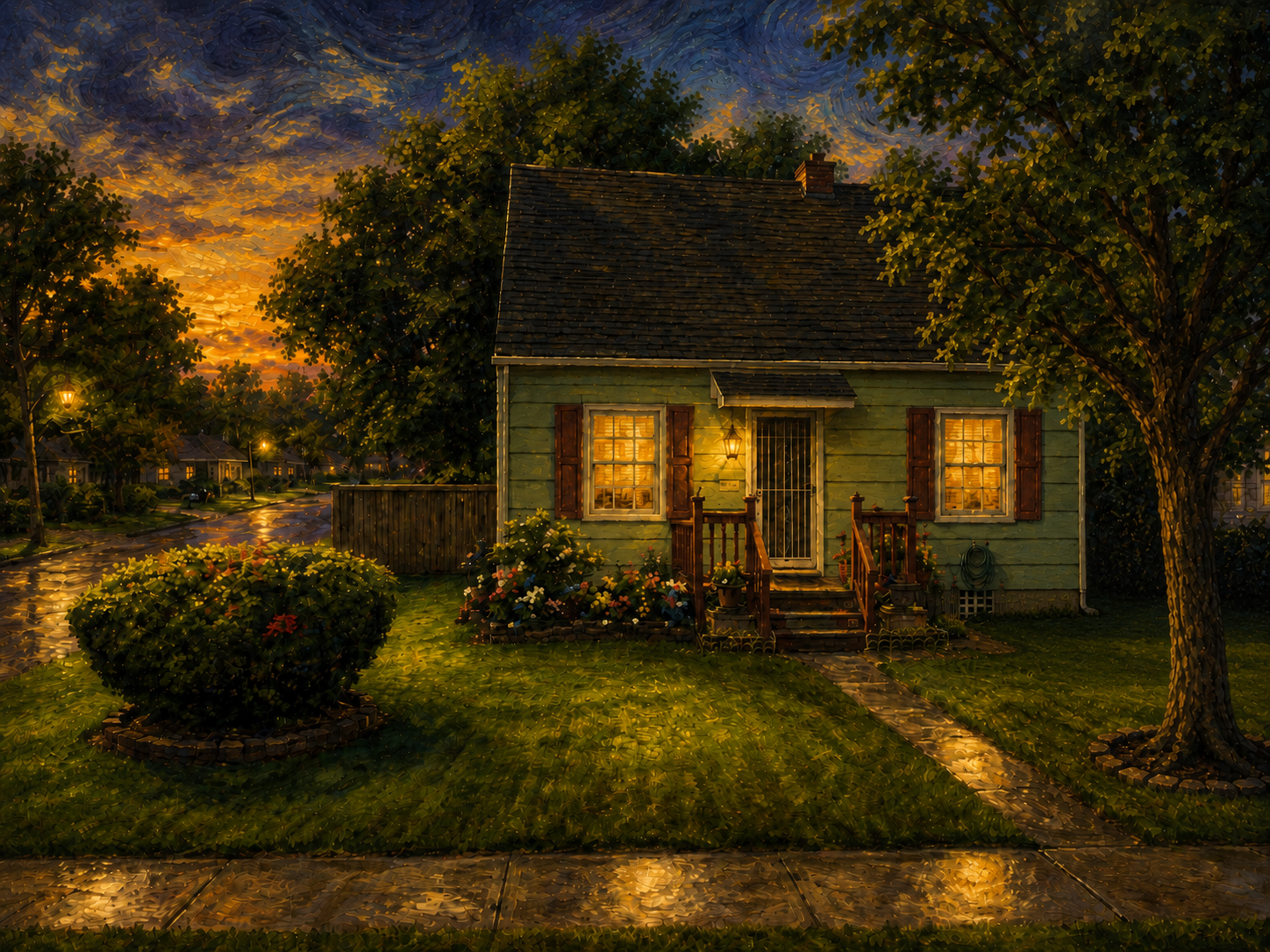
A warm, nostalgic painting of a small sage-green suburban house at sunset, glowing with interior light beneath a swirling twilight sky, evoking themes of home, memory, safety, and childhood reflection.
We would always refer to it as “the summer we came home” in the years that followed. It was the lack of understanding of that metaphor that kept me emotionally homeless for so long. I remember being scared that entire car ride—the week prior having been a blur of rescue by the police from things I wish I’d never seen; and protective hiding; clipped phrases like “emergency change of custody.” And watching Ghostbusters on a VCR (whatever that was). I remember being hungry. A lot.
The nightmare was over and it was time to be together.
Survivors.
Family.
When we eventually arrived at what would become home, I was clutching my panda bear, Jimmy, under my right arm walking through the door; and then: a flash bulb! Like some paparazzi. My mom’s new house came with a man, there to greet us, ready with a Kodak memory. I knew him; but he wasn’t my Dad. He seemed nicer to Mom than my Dad had been.
Then, she got down on my level, before we’d even toured our new home,
“Now, understand,” she said,
“In my house, things will be different. There won’t be any screaming or fighting. Things will be calm and quiet. I insist; in fact it’s a rule here. All of us, including you, will have ‘quiet time’ where we are in our rooms, alone, doing quiet activities by ourselves. Understand?”
I didn’t. I’d always been told that I was something called “hyper,” whatever that was. I didn’t really understand what was being said to me, just that this “quiet time” thing was a rule here. I’d just been through hell. At six years old, I was the child equivalent of a war veteran. Compared to shouting, fighting, heads through walls, police being called, or hiding in the country for a week watching Ghostbusters on a VCR (whatever that was), quiet time sounded like a bargain. It was the summer we came home.
Looking back now, I can’t really remember what came first, the bullying or the eating. See, all of it just really blends into a core part of my childhood that can be summed up more easily and more singularly as alone. I found out quickly that “quiet time” usually meant that I was fending for myself. If I was bored, then I watched TV by myself. Until it was too loud and then I had to go to my room and play. By myself. If I was hungry, I ate by myself. I took an interest in the food because it was something to do more than anything else. I’m not super clear on when exactly my mother taught me to read recipes, but I do remember making barbecue ribs from a cookbook when I was about eight or nine. So, when I was bored, I cooked, and I ate.
I also experimented with the cookbooks we had. I made this thing or that from the wrong ingredients because I was tired of not having the foods I wanted. Before age 10, I created the correct pastry for a cream puff from The Fannie Farmer Cookbook, while attempting to create the cream from powdered coffee cream, sugar and hot water. Validation came in the form of surprise and pride at my apparent ingenuity, even when my attempts were doomed to fail. Suddenly, eating became something to do during quiet time, and at my age, I didn’t realize food was becoming more than nourishment. I didn’t know it then, but an evolution had already begun.
For me, eating had become a form of self care that got me noticed at home. It got me approval and care from my mother.
“Look at how independent you are!” she would gush. Right before disappearing into her bedroom with her boyfriend for the evening. That validation meant everything to me, though. It meant she saw me. It meant that she loved me. That I was good. That I was doing something right. What I understand now, that I didn’t and couldn’t understand then, is that it meant that I was safe.
At the same time, though, I was gaining weight, hand over fist. Because validation alone isn’t enough. So, I had to do whatever I could to feel safe when I was alone. I replaced that validation with the food, because I knew she would appreciate it. Right up until she didn’t.
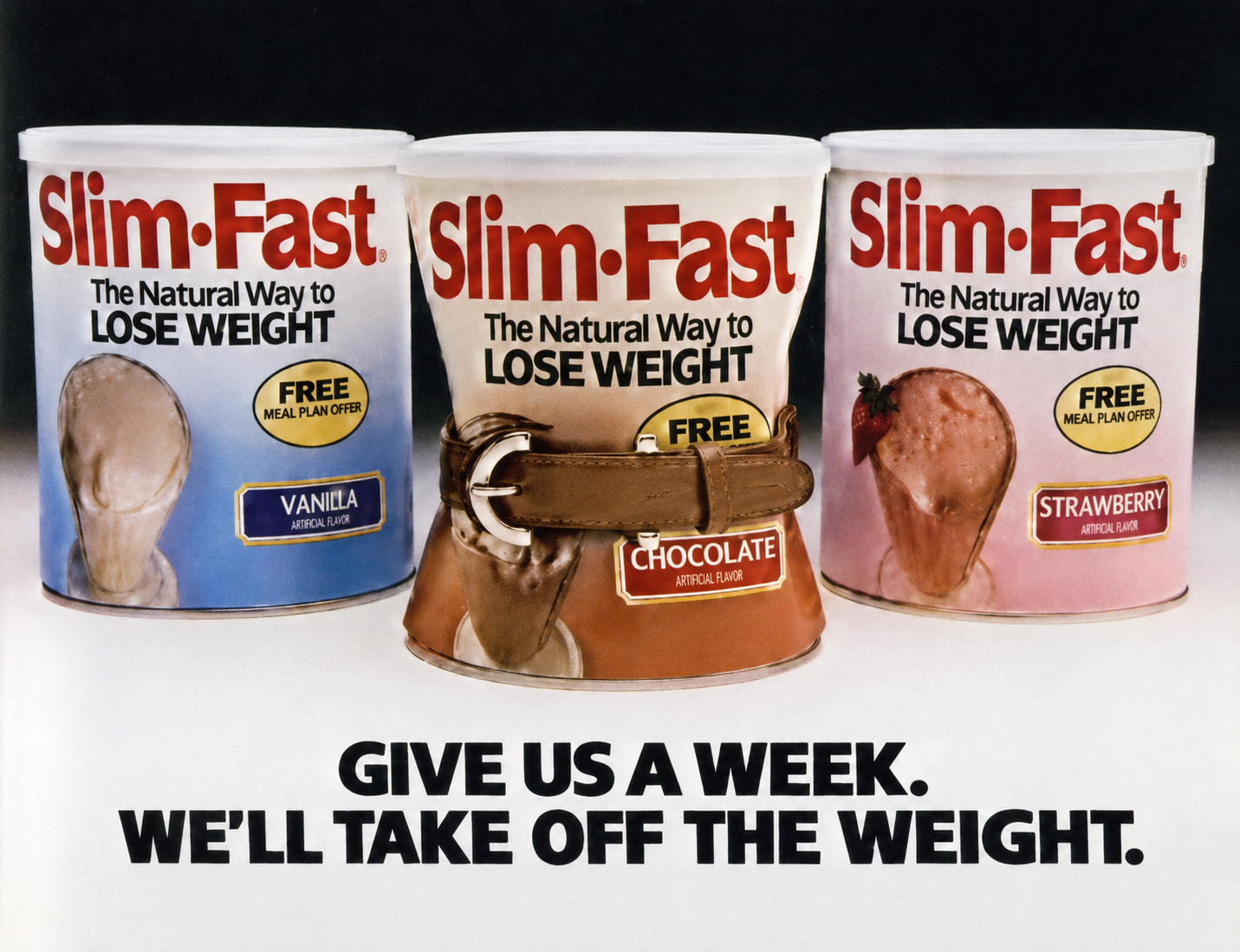
Vintage Slim-Fast advertisement from the 1980s featuring powdered shake containers and the slogan “Give us a week. We’ll take off the weight,” reflecting the era’s diet culture messaging.
It was the time I tasted a Slim-Fast Pina Colada shake when I was alone. It was creamy. Delicious. I had seen the commercials on television, “Give us a week, we’ll take off the weight,” they said. At school I was fat. I had bigger titties than everyone’s mom. I was last one picked for all the sports. I was barely even human. Maybe this would work. Maybe if I had more than one it would work faster? Maybe if I had the whole can it would work by tomorrow? I honestly don’t remember if that was my reasoning. I just remember that I went through as many of those shakes as it took for me to stop feeling scared and alone.
And what did Mom say when she found out I’d gone through the whole can?
I wasn’t independent anymore.
Suddenly I was disgusting. And out of control.
Some lessons don’t stay in childhood just because childhood ends.
What it all amounted to was a lot of sickness and regret. Once my body stopped feeling safe to live in, I wrecked it. In my adulthood, I was nearly 400 pounds, bad knees, arthritic back, ulcers, and a bad gallbladder, among other things. Even with this rogues gallery of predictable outcomes, I frequently sat in doctor’s offices while they stared in amazement at me saying,
“There’s no reason you should be as healthy as you are at this weight.”
I wore this as a badge of honor, of course. Until my gallbladder blew out and I experienced pain. True pain. Real pain. The surgery for it was simple, but I had to wait over a month before I could get it. A month of “attacks.” Each one felt like a heart attack. I was unable to eat, sleep, or find a moment’s peace. In the end the surgery was a success. I felt better almost immediately, except for only being able to have broth.
Over the years, I’ve wondered whether what we do in pain actually says what people think it says. Was drinking an entire can of Slim-Fast proof of gluttony? Or was it a terrified kid trying to stop feeling scared and alone?
Now I sat, not just scared and alone, but in pain.
Sitting in the wreckage of my life. Disgusted. Most certainly. Out of control? No. I might actually have been more clear headed in that moment than ever before. Safety is more than what you’re eating and nourishment is more than the food you’re putting in your body.
That night? I made a promise that my body would become safe to live in again.
Every time I tell the story, I say how I was standing in my kitchen and I heard the voice in my head say,
“It all starts with what we eat.”
And it’s true. That did actually happen. But honestly, I was fascinated by food. From the very beginning, back in that kitchen during quiet time, flipping through cookbooks and experimenting, food was a companion.
Funny thing about blowing up your own life (over and over again). You have plenty of stones for a new foundation. And so I began to stack the stones into something that was just mine. After a time, I wondered whether I wanted the future I kept seeing in my dreams. For the first time, there was no one around to tell me I couldn’t have it.
The best part? How I get to feed my family. On a diet of safety and focus and support and meaning and joy. My recipe? Chocolate Peanut Butter Cream of Wheat. Duh.
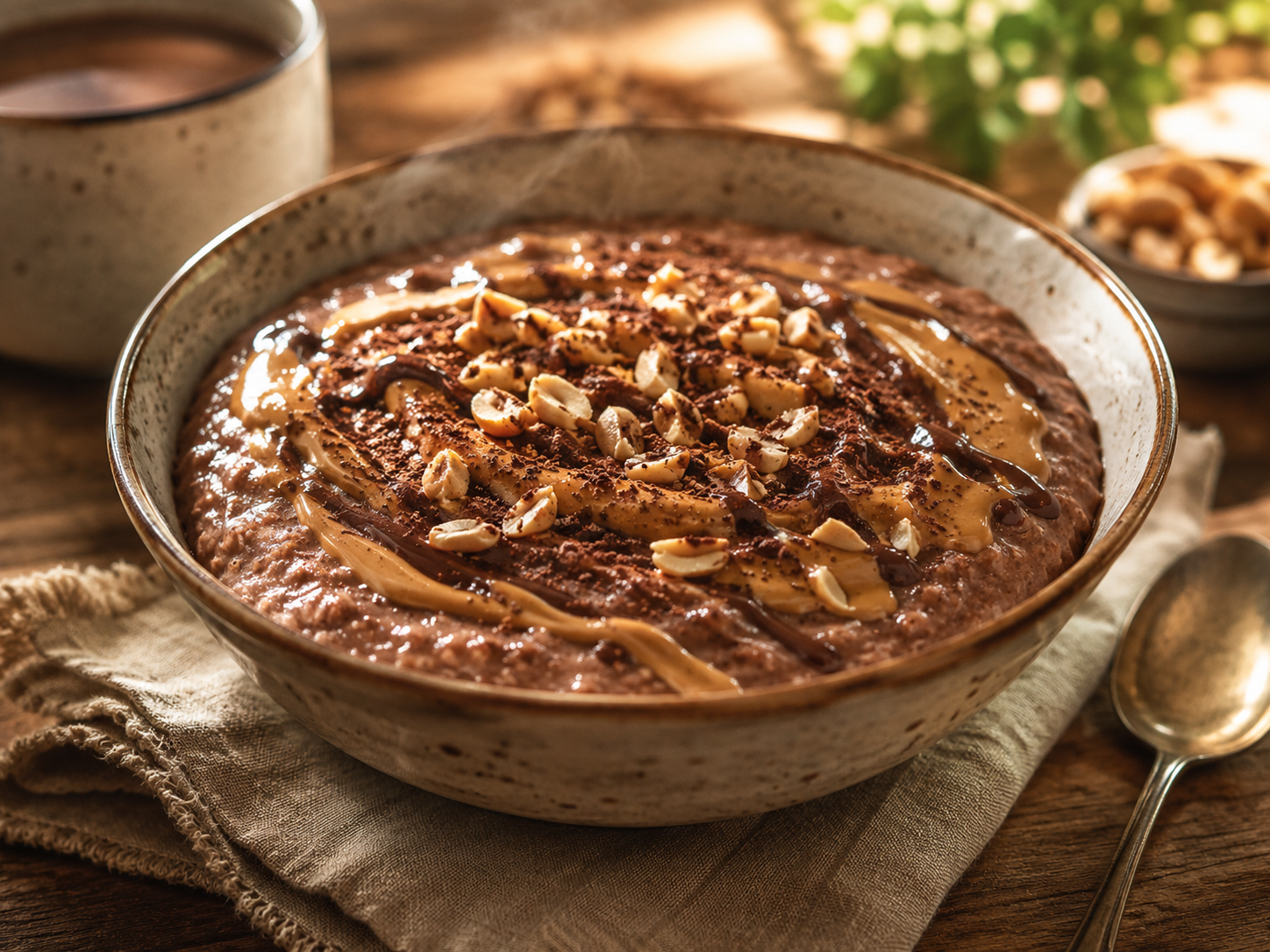
A cozy bowl of chocolate peanut butter cream of wheat topped with melted peanut butter, cocoa, chocolate drizzle, and chopped peanuts, served warm in rustic morning light.
I remember the day I came up with it.
My son, my little fire, was in seventh grade; fighting his own adolescent battles. I tried everything I could think of to get him a solid breakfast that would carry him through his day while I gave him the best example of “man” I could think of: the exact opposite of what I’d seen.
Because melting coconut oil into cocoa powder and caramelized syrup felt more worthwhile than most of the other things I could have been carrying.
I spent more time on the whole milk that he could thrive on and the cereal that would stick to his ribs; but most of all, I focused on the peanut butter that I stirred in until it melted. The bit he said made it taste like a Reese’s Cup. Because that was the part that mattered. Because that’s what made him smile; and that smile? That’s what made me feel like a Dad.
I’ve lost so much of myself to being alone that it honestly became a metaphor for my entire world. Waking up and realizing that in the end there was a family after all? That’s more than just a gift. It changed the way I nourish myself, because it turns out some of the things we need most aren’t food at all. Rhythm and safety for my body clarity and focus for my mind, joy and expression for my spirit, belonging and support for my community, but most importantly? Meaning and motivation for my purpose.
And maybe that’s the whole point—not that I learned how to eat, but that I learned how to be fed.
Enjoyed this story?
Food Always Tells a Story is Father’s Food’s recurring essay series exploring the ways food shapes memory, identity, family, culture, comfort, and the stories we inherit about nourishment.
Learn more about Father’s Food.
Read more about nourishment culture here.
