
Before it was stigma…it was just food
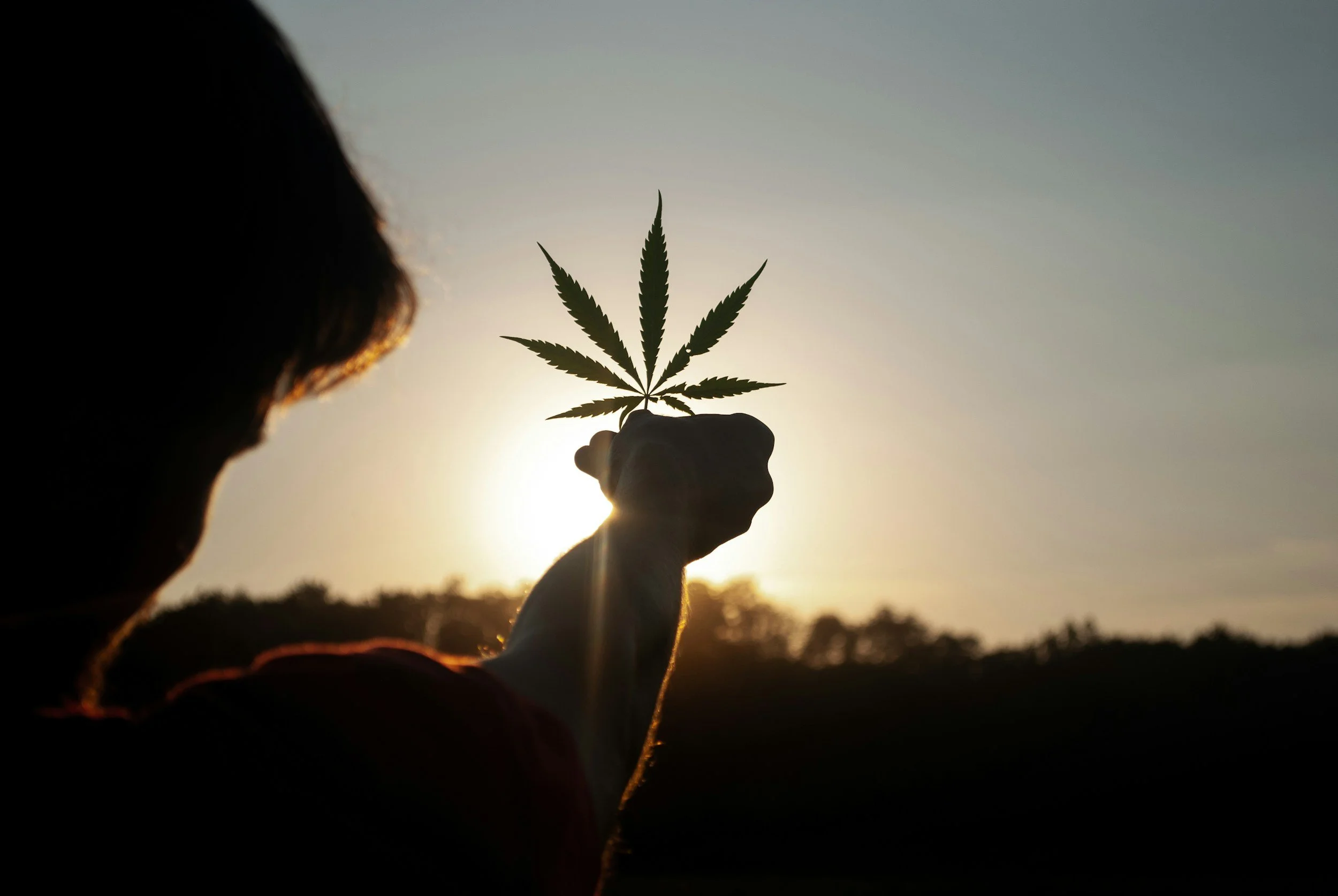
Beyond the stigma.
Cannabis, culture, and the stories we inherit.
Cannabis is having a moment.
As of early 2026, half the United States—24 U.S. states and Washington D.C.—have legalized cannabis for adult recreational use, while medical cannabis is legal in 40 states. In May 2024, the U.S. Department of Justice proposed moving cannabis from Schedule I to Schedule III on the list of controlled substances. While public comments, hearings, and review processes have taken place over the past two years, no final federal rule has been enacted as of this writing.
Around the world, countries such as Canada, Uruguay, Germany, Malta, Luxembourg, South Africa, Georgia, and Thailand have legalized recreational cannabis at the national level. More than 50 countries have legalized medical cannabis to some degree.
Yet despite a global shift in law, research, and economic investment, cannabis remains one of the most stigmatized substances in modern society. One study found that medicinal cannabis users were frequently labeled as irresponsible and unreliable. The image of the unwashed, long-haired, tie-dye-wearing “pothead” remains a persistent part of the cultural zeitgeist. Cannabis users are still people we’re warned away from and told not to trust.
The laws are changing. The story isn’t.
It comes down to one simple truth: cannabis didn’t become stigmatized because of what it is. It became stigmatized because of what it was made to represent.
This stigmatization can, arguably, be traced to the last century here in America.
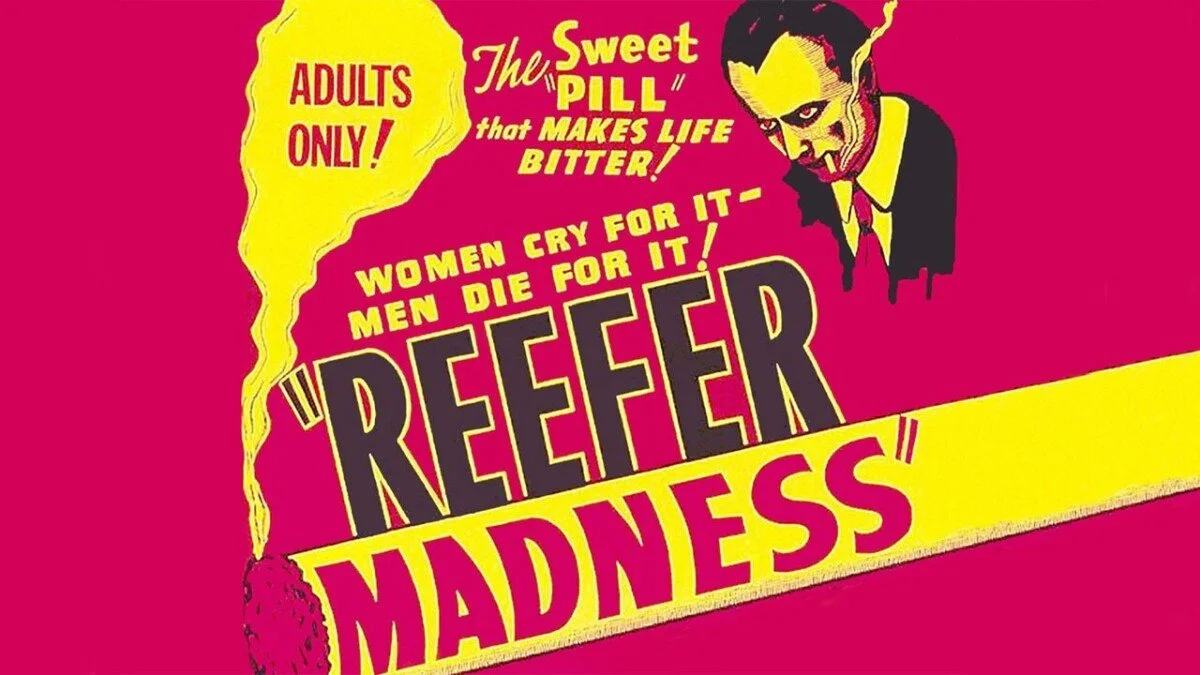
A brightly colored vintage-style poster for Reefer Madness, using bold red, yellow, and black graphics. The poster features alarmist promotional text, a large smoking joint, and a sinister illustrated figure in the upper right. The design reflects early anti-cannabis propaganda and fear-based media messaging.
In the U.S., cannabis became tied to fear-based media in films such as Reefer Madness. Its use became associated with crime and moral decline, fueling public panic around what it was and how it was used. Racialized narratives linking cannabis to marginalized groups reinforced that panic, shaping messaging rooted more in fear and social control than in science or understanding.
When cannabis was placed in the Schedule I category under the Controlled Substances Act—classified as a substance with high abuse potential and no accepted medical use—it moved from something merely “controversial” to something institutionally condemned. Research into its potential became heavily restricted. The stigma didn’t just persist. It became culturally validated.
And yet, before the laws, before the fear, before control eclipsed curiosity, cannabis tells a very different story.
For most of human history, cannabis was practical. Hemp was used for rope and textiles. Cannabis appeared in medicinal traditions across cultures throughout history. And its roots in agriculture stretch back to the Neolithic period, where it was cultivated in China alongside rice, barley, millet, and soybeans as part of what became known as “the five grains.” A study published in the Journal of Archaeological Science found evidence that cannabis was grown in northern China primarily for food or fiber.
It isn’t often that reading something stops me in my tracks—but that did.
Not because of what it says about cannabis.
Because of what it says about us.
And more importantly, what it reveals about the stories our foods tell us—or the stories we tell ourselves about our food.

A museum-style Neolithic diorama depicting early humans, in Hong kong, constructing a wooden structure on a rocky shoreline. Two figures work together setting upright timber posts in the sand while the ocean and large coastal rock formations stretch into the background under a muted sky. The scene evokes early human settlement, craftsmanship, and communal labor.
Whether we’re talking about textiles in the Neolithic, psychoactive compounds reserved for funeral rites, modern “edibles,” or non-psychoactive CBD oils and tinctures, the truth is this: this isn’t really about cannabis.
It’s about the ways we learn to decide whether a food, substance, or medicine is “clean” or “dirty.”
We see this all the time in modern nutrition culture. Fad diets encourage us to “cut carbs,” “eat paleo like our ancestors,” or reject entire categories of food altogether. Other eating patterns define themselves in opposition to those ideas. The common thread is often the same: foods become moralized. Some are elevated as virtuous. Others become symbols of failure, weakness, impurity, or excess.
So who decides what is and isn’t a “good” food? And how do those ideas spread until they become part of the cultural landscape itself?
Cannabis is far from the only stigmatized substance in our food system.
Alcohol has its own long and complicated relationship with humanity. Some evidence suggests intentional fermentation began nearly 10,000 years ago. Before modern sanitation, wine and beer were often safer to drink than water. During the American Civil War, alcohol was frequently used in pre- and post-operative care. In France, children were given watered-down wine in school cafeterias until 1956, when the practice was finally banned. America, meanwhile, experienced its own cultural reckoning during Prohibition.
Sugar—now so common that we struggle to avoid it unless foods are specifically labeled “sugar-free”—once fueled colonization and industrialization. By the 17th and 18th centuries, sugar had become “white gold.” Caribbean sugar and molasses rivaled Spanish silver in value, contributing to black market trade, piracy, and global economic expansion.
Even staple foods like white rice or white pasta are often criticized through oversimplified ideas about “good” and “bad” carbohydrates, despite their deep roots in Asian and Italian food traditions. Foods associated with communities of color are frequently stereotyped as unhealthy because they are perceived as high in fat, sugar, or salt. Deep-fried foods, MSG, coconut oil, processed foods, “guilty pleasures”—the list goes on.
We don’t just eat food. We inherit opinions about it.
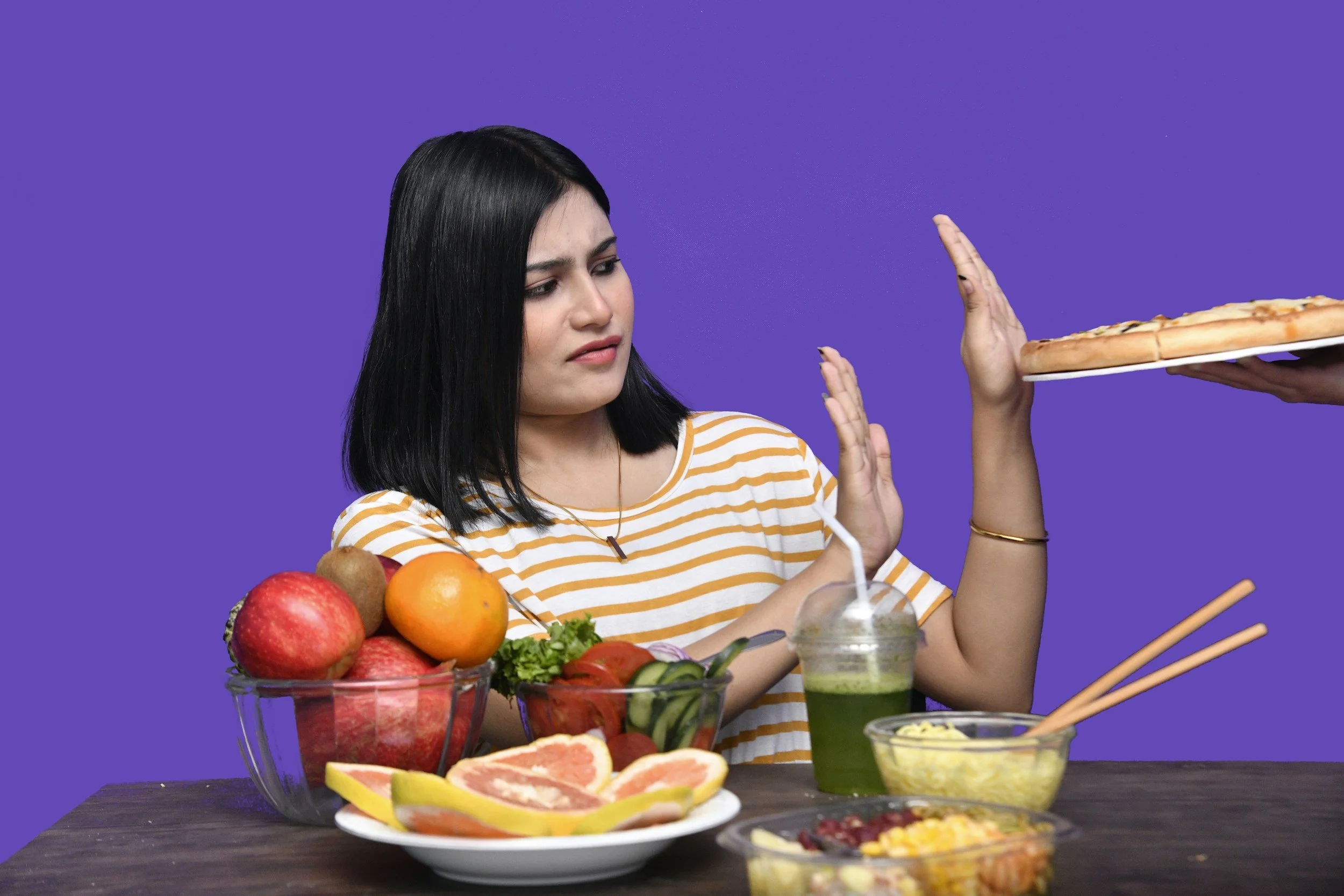
A young woman sits at a table filled with fruits, vegetables, and healthy meal options while reacting skeptically to a slice of pizza being offered to her from off-camera. The bright purple background and contrasting foods emphasize themes of food choice, diet culture, and perceptions of “healthy” versus “unhealthy” eating.
Nutrition, at its best, asks different questions than culture does.
Nutrition science is generally less concerned with morality than with context. What role does something play? How is it being used? In what quantity? Under what conditions? By whom?
When we think in those terms, nutrition becomes less about assigning moral value to food and more about understanding patterns, relationships, and overall health. A low-fat diet may make sense in one context and not in another. Sugar may function differently depending on how it is used and what role it plays in someone’s dietary pattern. Some individuals genuinely require higher-fat diets because of metabolic needs, while overeating itself can also represent a form of malnutrition. The whole person matters more than any individual food.
Food is rarely one thing.
Caffeine, consumed daily by billions of people worldwide, is a psychoactive stimulant that many of us view as essential to modern life. Sugar, alcohol, caffeine, fats, and salt all carry both benefits and risks. They also carry stories. In order to simplify those stories, we often reduce foods into categories of “good” or “bad” because it feels safer and easier to understand.
But acknowledging complexity does not mean abandoning critical thinking. Risk still matters. Context still matters. Health still matters.
There’s a deeper layer as well: when food becomes moralized, people often stop engaging with it honestly. Shame eating, “cheat meals,” hiding eating behaviors, masking habits out of fear of judgment—these are all ways people learn that honesty about nourishment is unsafe.
Foods and plants exist in relationship with people, culture, history, and survival. The stories attached to them shape how we engage with them—sometimes more powerfully than the substances themselves. Foods do not arrive at the table free from narrative. We don’t just inherit recipes. We inherit emotional frameworks around eating.
The body responds to nutrients. People respond to stories. The role of nutrition isn’t to flatten every substance into “healthy” or “unhealthy.” It’s to understand relationship, context, pattern, and impact.
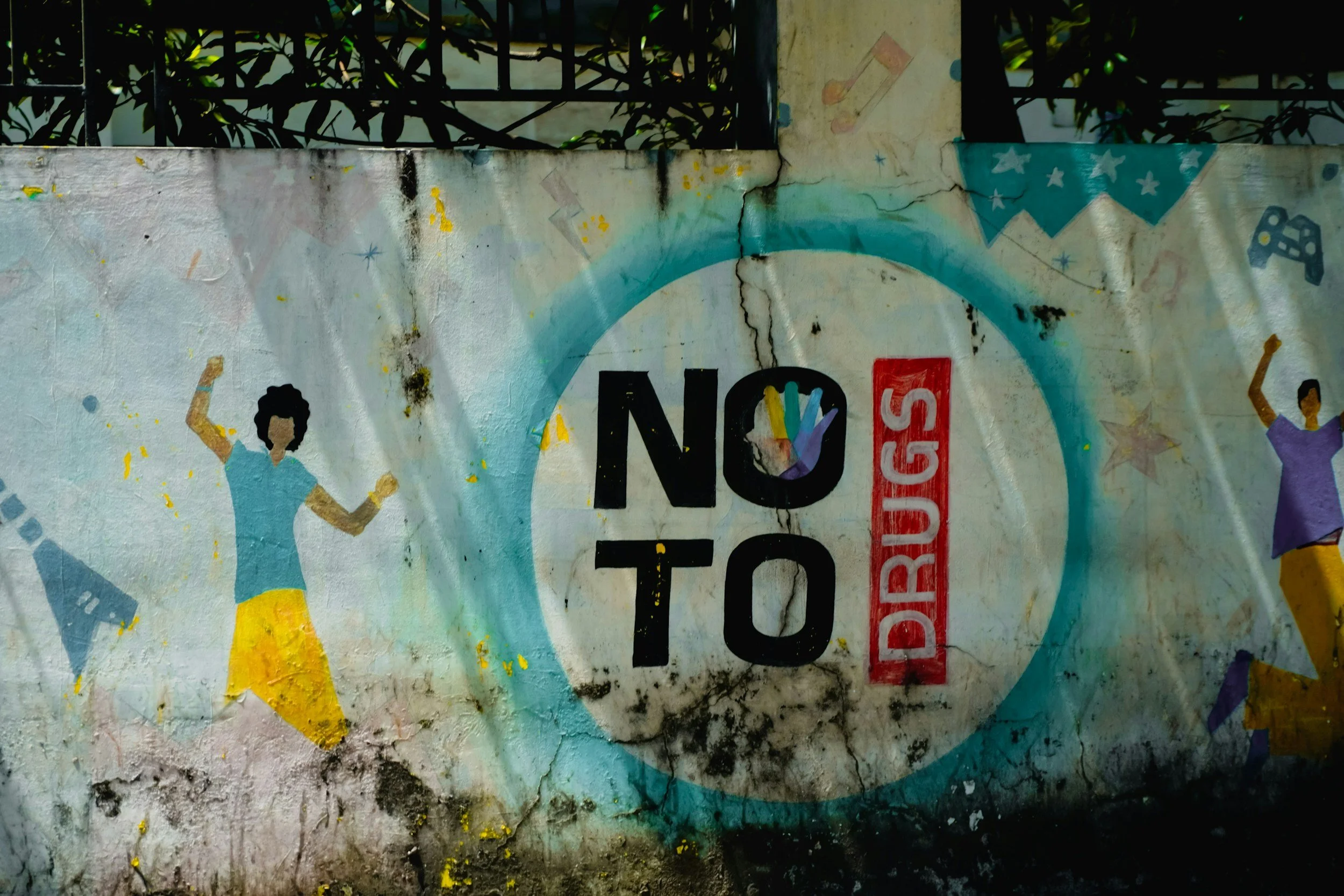
A weathered street mural painted on a concrete wall features the bold phrase “NO TO DRUGS” surrounded by colorful illustrations of people and playful graphic elements. Cracks, stains, and aging on the wall contrast with the bright anti-drug message, giving the mural a gritty urban feel.
The story of cannabis in the Neolithic is fascinating because it widens the lens around a crop that has become culturally loaded. The fact that cannabis was used not primarily for psychoactive effects, but for food and fiber, reframes the conversation entirely. Suddenly the story becomes older, broader, and far more nuanced than modern stigma allows.
In my excitement over that discovery, I eagerly shared it with other professionals I thought might find it interesting. The response was quiet. In one case, the subject was simply changed.
And I realized: it wasn’t about the research itself. It was about the meaning attached to it. Stigma shuts down curiosity. People disengage not necessarily from facts—but from what those facts represent.
No matter what the food or substance is, there always seems to be a story attached to it. A reason why it should be embraced completely—or rejected outright. Sometimes that story grows from legitimate health concerns. Sometimes it grows from cultural identity, fear, politics, misunderstanding, or personal experience.
Whatever the source, food does more than nourish us.
It organizes us.
It tells us what is acceptable, what is shameful, what belongs—and what doesn’t. It hands us inherited rules alongside the recipes we cherish.
So perhaps the question isn’t whether a food is inherently “good” or “bad.”
Perhaps the better question is this: What story were we given about it—and do we still believe it?
The world will tell you what belongs on your plate. Your job is to decide whether that story is true.
Check out the five grains harmony bowl recipe inspired by this essay!
