
A Picnic in the Woods
A woman says she’d feel safer coming across a bear in the woods than a man she doesn’t know. A man replies that he’d feel safer expressing his honest emotions to a tree than to a woman who already sees him as a threat. By this point, none of us are surprised by viral social media trends, although this one has been around for a little while. Usually, however, social media trends have a touch of the absurd attached to them, choosing a bear? Talking to a tree? What’s really telling about this trend, however, is that it’s the reactions that really tell the story. Because the sentiment isn’t laughable or absurd. It’s felt by men and women alike.
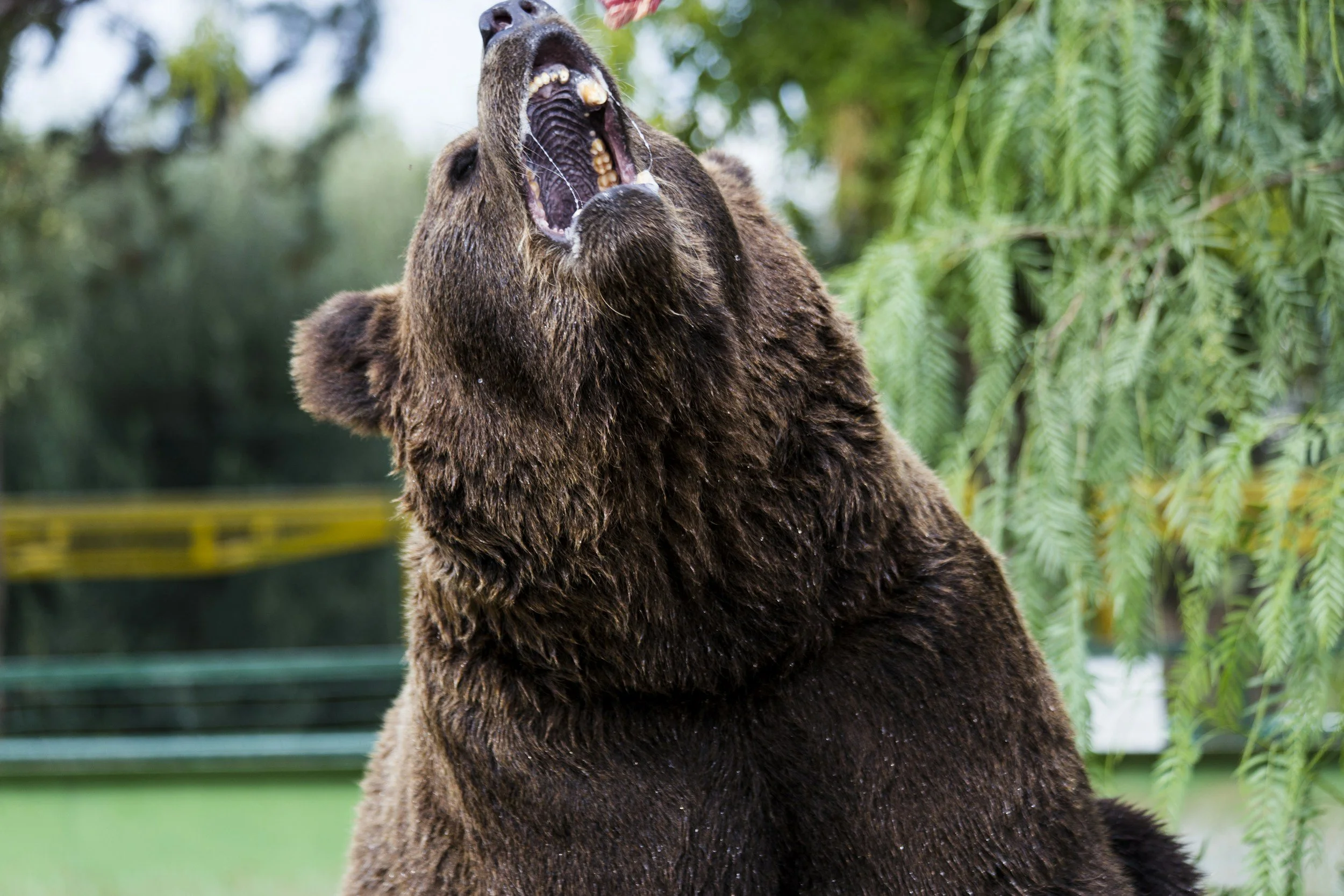
A powerful brown bearwith its mouth open in a roar, teeth visible and body tense. Its heavy coat catches the light as it stands in a natural setting, creating a sense of presence and raw intensity.
Women aren’t talking about bears. They’re talking about fear. About calculations of safety, they learned to make, and carry with them into everyday life—sometimes before they understood long division as a concept.
Men aren’t talking about trees. They’re talking about vulnerability; the ability to access and express a full spectrum of emotion—safely. They’re talking about walking into a conversation already cast in a role they didn’t choose.
Both responses land. Both hit something real. And if we stop there, then we may as well admit that we’ve lost the plot and we’re cooked.
From here, we find ourselves on the playground of adult sensibilities where shouts of “no I didn’t!” become cries of, “not all men!” With the response of “yes, you did too!” maturing to, “not all men, but always a man.” A familiar back and forth—more mature, and with stakes so high that such a comparison invites ridicule; and yet the outcome is the same. Nobody is actually listening—just defending, reacting, bracing.
Past a certain point, the conversation isn’t about bears and trees, or safety, fear and vulnerability. It becomes about survival. We become focused on how to survive within the argument itself, shifting the message away from the quiet empathy we started with. No longer trying to convey to each other the message of misunderstood needs and why the analogous choices have been made; all attempts at understanding have given way to the “I’m right/you’re wrong” ethos of trying to win.
It has been said that compromise happens when an agreement is reached that all parties are comfortable with but in which no parties receive everything they want. In such a discussion the agreement comes from true understanding. When we cease trying to understand each other and just focus on winning, then the outcome is already decided.
Everyone leaves more convinced.
No one leaves more connected.
Maybe the problem isn’t the bear; maybe it isn’t the tree either. Maybe the problem is that both answers come from the same place: trying to meet a true and honest human need in a way that feels safe. Feeling unsafe with people doesn’t mean you stop needing connection. But it may mean that you stop reaching for it, that you start choosing things that don’t require it. A bear is predictable—it doesn’t pretend to be something it isn’t. It won’t hide intention behind conversation. A tree asks nothing. It doesn’t judge. It doesn’t weaponize openness. Neither requires vulnerability, or trust. And neither can actually nourish you beyond survival.
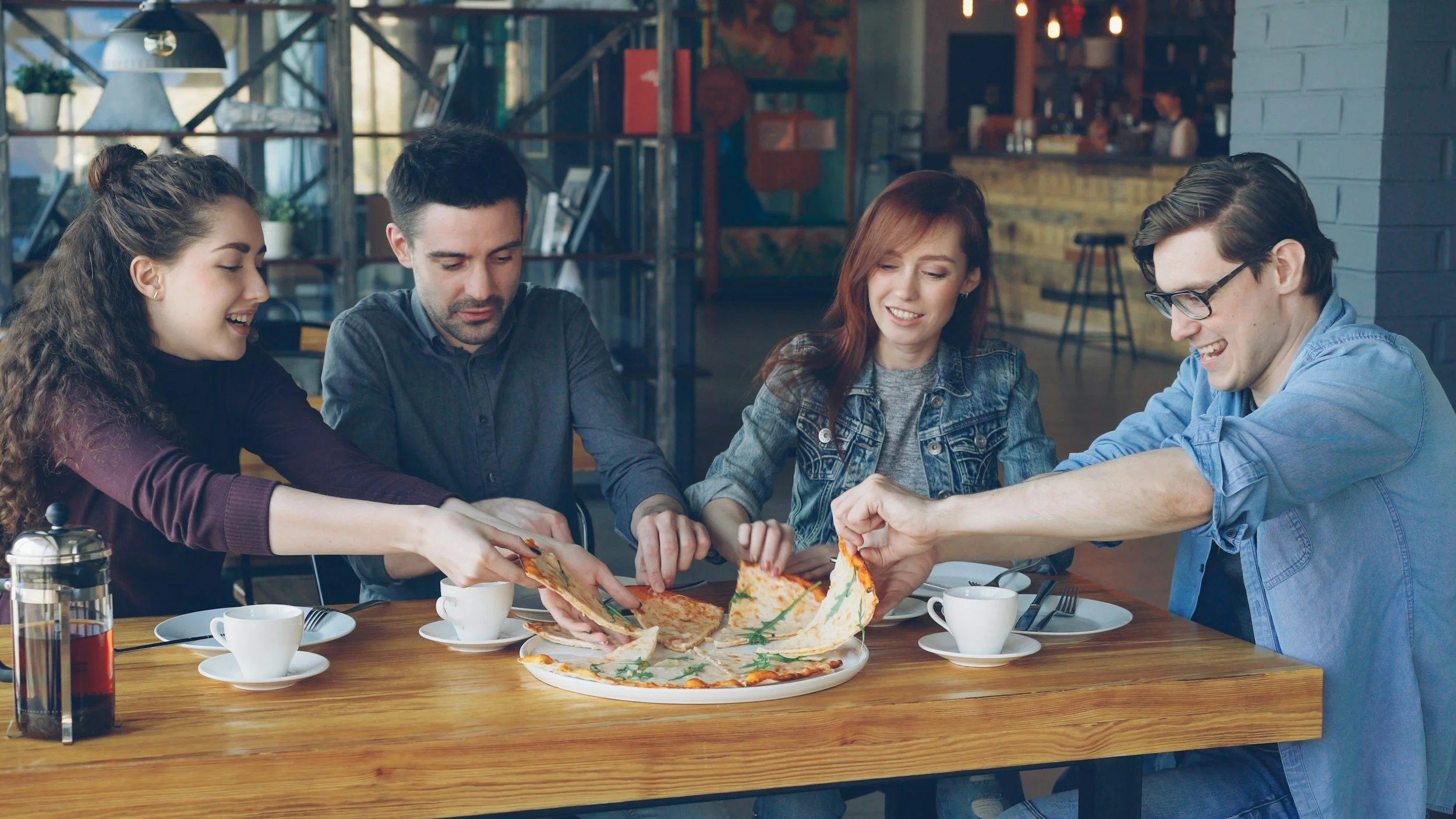
Four people gather around a table, reaching in to share a pizza together, capturing a moment of connection, conversation, and shared experience over food.
As with most things, truth often starts with what we eat; and we see this pattern played out unconsciously at the table. A recent study assessing the food preferences and dietary tendencies of men and women shows clear patterns that communicate this conversation another way—we just have to be open to “hearing” it. The study not only found clear differences in eating patterns and preferences across gender lines; but also, that those differences are influenced by culture, environment, behavior, and social norms. So, not an identity, but an adaptation relative to comfort, acceptance and safety.
Women tend toward structured, health-oriented eating. Being more likely to choose a regular eating pattern of healthier foods and snacks at measured intervals through the day, shows intention and desire for predictability—maybe even a controlled outcome. A higher intake of fruits, vegetables and a diverse diet comprised of a variety of whole foods is aligned with nutritional health and wellness in ways that will support feelings of well-being and safety in everyday life.
Men tend toward a taste-driven, heavier consumption of food, preferring larger meals of substance with fewer snacks—often skipping snacks altogether. The male preference for meat, salty foods and specific, taste-driven choices shows up clearly. The trend among men’s eating patterns is less structured overall, but nevertheless denotes patterns of substance over form, intensity over volume and immediacy over constancy. Such an eating pattern could suggest alignment with fulfillment, regulation and satiety as things that support feelings of well-being and safety in everyday life.
It isn’t just about bears and trees or even food. It’s about true nourishment. The things that fill us up that come from our own perception of our identity, and the story we’ve lived to get there. People don’t just eat what nourishes them. They eat what feels safe to reach for.
When people don’t feel safe—emotionally, physically, relationally—they adapt. Not because something is wrong with them. Because something happened that taught them it was necessary. Sometimes the lesson comes early that the world isn’t always safe. That attention isn’t always wanted and can come with risk. That closeness needs to be managed, or that being unguarded can cost more than it gives. So it becomes about being careful.
Stop asking.
Stop reaching.
Find ways to take care of yourself that don’t rely on anyone else.
Manage your hunger—for food, connection or something else entirely—privately. Quietly, so as not to disturb the status quo.
Plan ahead. Read the room. Choose what feels predictable, manageable and contained. Learning to ask for less, want for less and eventually—need less.
And then …
Connection becomes something that can only happen on terms that feel safe enough. A system that works splendidly, right up until it doesn’t.
At some point there’s a shift. A moment where awareness changes. The terms of connection no longer feel safe, they feel confining. Safety becomes isolation—loneliness, even. Then a new question surfaces, “what is this actually asking for?” And the answer isn’t always comfortable. Because what was once about control has now become about trying to meet a true and honest human need in a way that feels safe. True connection through shared experience, mutual presence, being seen and in seeing someone else. The kind of nourishment that can’t be created in isolation, behind a screen, or through an app that has you swiping left all night.
The kind of nourishment that can only come from true connection.
The kind that requires risk.
The bear keeps you alive. The tree keeps you safe. Neither one builds a life. Because, at the end of the day, survival and safety are not nourishment. Living in that pattern long enough, however—of false connection and control—can lead to seeing survival as a preference. Something we’d rather have because we’ve convinced ourselves this is just how we are. That what we can choose to have is better than the alternative. In the short term it can be. When all is said and done, though, the bill comes due and there’s always a cost.
None of this means that everyone should immediately start risking life, limb or emotional safety on the promise of true connection. Everyone came to the bear and tree debate with the scars that made these choices feel safer than the alternative. It isn’t as if the change is going to appear overnight. These things take time, and that’s okay.
Like any good, nourishing meal, it will require just the right ingredients prepared correctly; and it will need to be cooked to perfection. In a kitchen almost anything can be fixed in a recipe that has gone off the rails—but that doesn’t mean there isn’t always a risk of things getting burnt. And once it’s burnt it’s no longer nourishing. Even still, real connection isn’t guaranteed. It isn’t always safe, and it certainly isn’t on demand or achieved with immediacy. But choosing to never take the risk can come with a fresh emptiness that leaves a bad taste in the mouth.
The truth is, no one builds a community with a bear. And no one builds intimacy with a tree. No one is fully nourished eating alone in the woods, no matter how safe it feels. At some point, if we want something more than just surviving, we have to come back. Not to the argument. Not to the sides. But to the table.
Where does this leave us on the bear vs man and tree vs woman question? Maybe that isn’t the real question after all. Bear, tree, man, or woman—maybe the better question is this: what kind of nourishment are you really reaching for? And what made it feel like the only safe option available to you?
That’s the conversation.
And it’s one worth having…
As part of a shared experience. In mutual presence. Being seen by and seeing someone else.
Perhaps over a picnic—in the woods.
create the perfect picnic for two here.
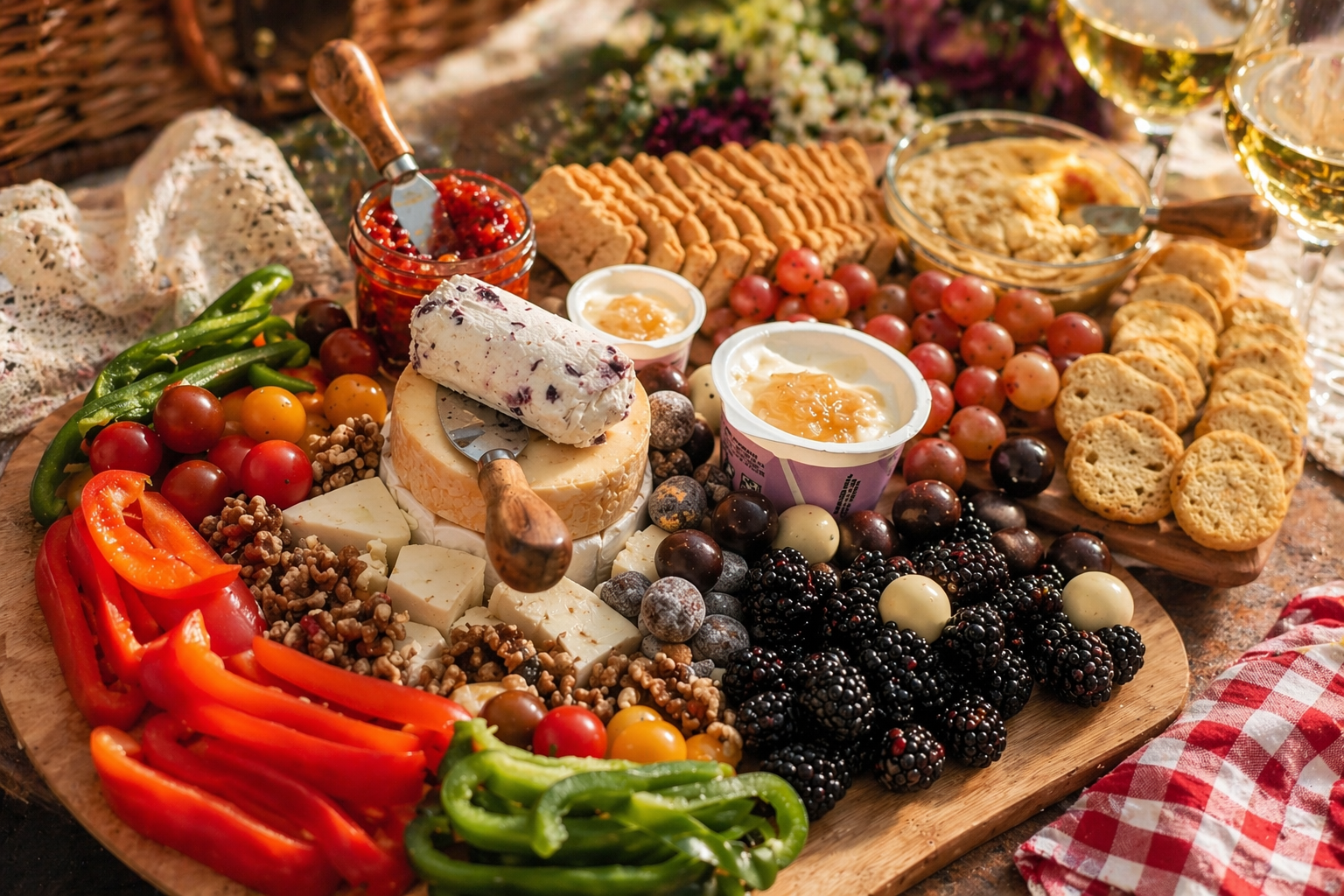
Picnic charcuterie board with assorted cheeses, crackers, fruit, vegetables, and dips on a wooden board.
